

Buy MOTS-c Peptide for Research – The Mitochondrial-Derived Metabolic Regulator, 99% Purity
The mitochondrial peptide that’s reshaping metabolic research.
MOTS-c (Mitochondrial Open Reading Frame of the 12S rRNA-c) isn’t just another research peptide—it represents a fundamental shift in our understanding of how mitochondria communicate with the rest of the cell . Discovered in 2015 by researchers at the University of Southern California, this 16-amino acid peptide is encoded not in the nuclear genome, but within the mitochondrial DNA itself .
What makes MOTS-c unique is its role as a retrograde signal—a messenger from the mitochondria to the nucleus that helps coordinate cellular adaptation to metabolic stress . Under resting conditions, MOTS-c is primarily distributed in the mitochondria. But when metabolic stress occurs—such as glucose deprivation or oxidative stress—MOTS-c translocates to the nucleus in an AMPK-dependent manner, where it binds to transcription factors and regulates nuclear gene expression to promote cellular balance and stress resistance. Buy MOTS-c Peptide for Research
When you choose to buy MOTS-c peptide for research, you’re acquiring a tool that has demonstrated remarkable effects across multiple research domains. Studies have shown that MOTS-c treatment in mice prevents age-dependent and high-fat-diet-induced insulin resistance, as well as diet-induced obesity . Human studies have revealed that exercise increases MOTS-c levels in skeletal muscle and blood circulation, indicating that MOTS-c is a mitochondrial-derived peptide induced by physical activity. Buy MOTS-c Peptide for Research
At Pinecrest, our MOTS-c:
-
Tests at ≥99% purity (HPLC verified)
-
CAS Number: 1627580-64-6
-
Molecular Formula: C₁₀₁H₁₅₂N₂₈O₂₂S₂ · C₂HF₃O₂ (TFA salt)
-
Molecular Weight: 2174.6 Da (peptide) + 114.0 (TFA)
-
Sequence: H-Met-Arg-Trp-Gln-Glu-Met-Gly-Tyr-Ile-Phe-Tyr-Pro-Arg-Lys-Leu-Arg-OH
-
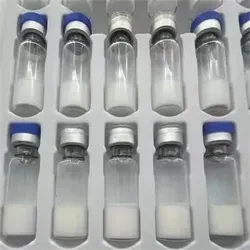
Delivered as lyophilized white powder
-
Available in standard research quantities
-
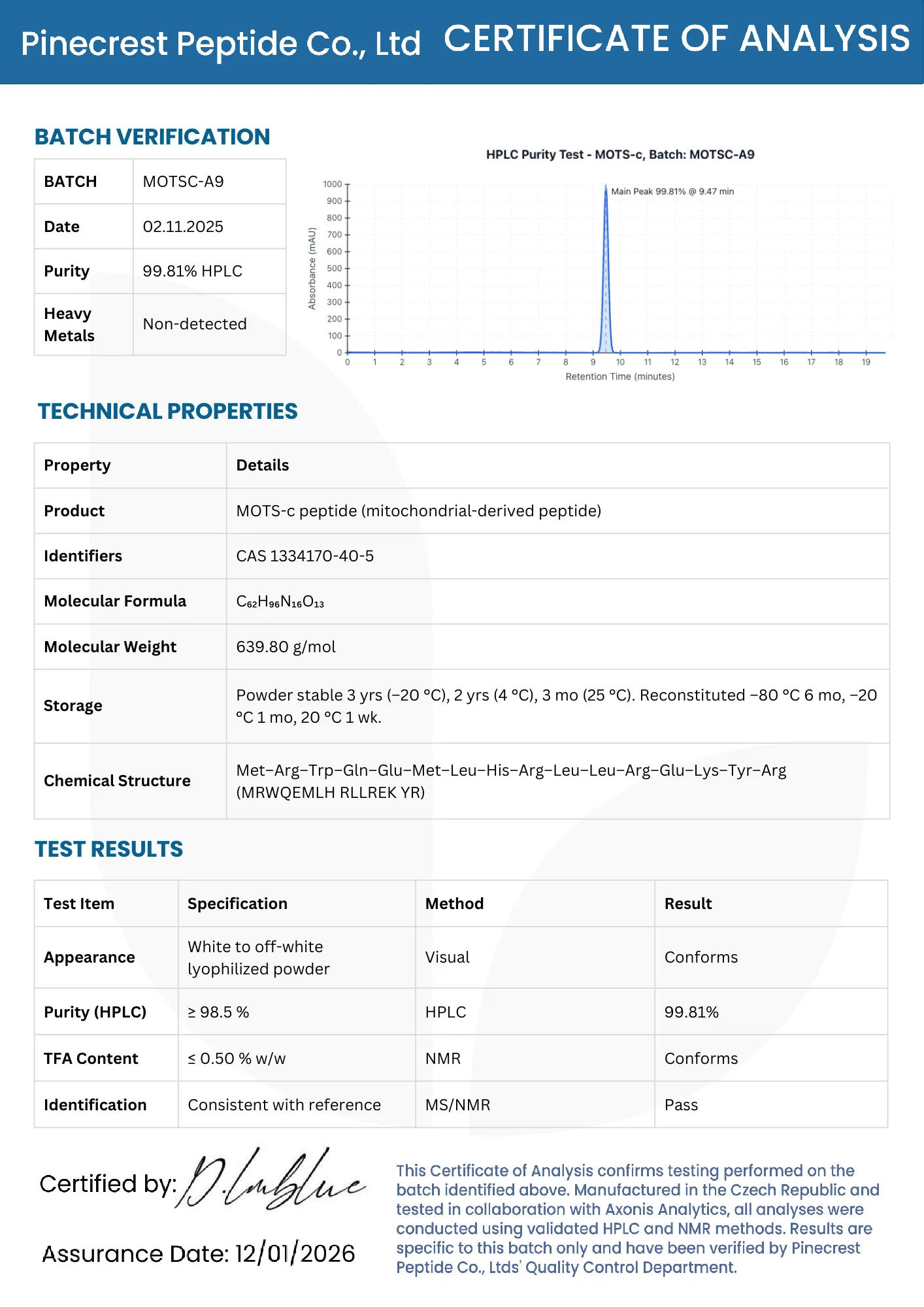
Includes batch-specific Certificate of Analysis
-
Ships from our China facility to your USA door in 5–7 days
-
Backed by our 100% purity guarantee
WHAT IS MOTS-c?
MOTS-c is a mitochondrial-derived peptide (MDP) encoded by a short open reading frame (sORF) within the mitochondrial 12S rRNA gene . It belongs to a novel class of bioactive microproteins that also includes Humanin (HN) and the small humanin-like peptides (SHLP1-6). Buy MOTS-c Peptide for Research
Molecular Identity
| Property | Specification |
|---|---|
| CAS Number | 1627580-64-6 |
| Molecular Formula | C₁₀₁H₁₅₂N₂₈O₂₂S₂ · C₂HF₃O₂ (TFA salt) |
| Molecular Weight | 2174.6 Da (peptide) + 114.0 (TFA) |
| Amino Acid Length | 16 amino acids |
| Sequence | H-Met-Arg-Trp-Gln-Glu-Met-Gly-Tyr-Ile-Phe-Tyr-Pro-Arg-Lys-Leu-Arg-OH |
| Synonyms | Mitochondrial Open Reading Frame of the 12S rRNA-c, MOTS3 |
| Appearance | White lyophilized powder |
| Purity | ≥99% (HPLC verified) |
| Solubility | Soluble in sterile 18MΩ-cm H₂O at ≥100 µg/ml |
Discovery and Significance
MOTS-c was first identified in 2015 through an in silico search for potential sORFs within the human mitochondrial genome . The peptide is encoded by 51 base pairs within the 12S rRNA region and contains a strong Kozak sequence that enables translation .
Remarkably, MOTS-c translation occurs in the cytoplasm using the standard genetic code, as mitochondrial translation (using the mitochondria-specific genetic code) would yield tandem start and stop codons . This indicates that the polyadenylated transcript is exported from the mitochondria—a process that, while still poorly understood, has been documented for various mitochondrial RNAs .
The peptide sequence is highly conserved across 14 species, especially the first 11 residues, suggesting important biological functions preserved through evolution. Buy MOTS-c Peptide for Research
MECHANISM OF ACTION: HOW MOTS-c WORKS – Buy MOTS-c Peptide for Research
Nuclear Translocation Under Metabolic Stress
Under resting conditions, MOTS-c is mainly distributed in the mitochondria outside the nucleus . However, when metabolic stress occurs—such as serum or glucose deprivation, or oxidative stress—MOTS-c translocates to the nucleus in an AMPK-dependent manner .
This translocation requires hydrophobic groups, suggesting that MOTS-c may need the assistance of other proteins to enter the nucleus—a mechanism that requires further investigation .
Gene Expression Regulation
Once in the nucleus, MOTS-c binds to transcription factors regulated by antioxidant response elements (ARE), particularly NRF2 (nuclear factor erythroid 2-related factor 2) . This interaction activates anti-oxidative stress genes, improving cellular stress resistance .
Microarray analyses have shown that MOTS-c treatment produces a clear global gene expression profile shift, with significant alterations in genes associated with cellular metabolism and inflammation .
AMPK Pathway Activation
MOTS-c promotes the biosynthesis of the endogenous AMP analog AICAR, which consequently activates AMP-activated protein kinase (AMPK) . This pathway is central to metabolic regulation:
-
AMPK activation enhances glucose uptake and improves insulin sensitivity
-
The metabolic effects occur through inhibition of the folate cycle and its tethered de novo purine biosynthesis
-
This leads to cellular energy sensing and metabolic adaptation
Tissue Distribution and Exercise Response
MOTS-c is detected in various tissues in mice and rats, as well as in human and rodent plasma . Fasting lowers endogenous expression of MOTS-c in metabolically active tissues (skeletal muscle and testes) as well as in plasma, while homeostatic tissues (brain and heart) show sustained levels .
Remarkably, exercise stimulates MOTS-c expression:
-
Endogenous MOTS-c levels in skeletal muscle increase approximately 11.9-fold following exercise compared to pre-exercise values
-
This elevation can persist for up to 4 hours after exercise
-
Circulating MOTS-c levels increase 1.6-fold during exercise and remain elevated 1.5-fold post-exercise
This has led researchers to describe MOTS-c as a “motion simulator” that can mediate the function of the exercise signal system .
RESEARCH APPLICATIONS
Metabolic Disease Research – Buy MOTS-c Peptide for Research
MOTS-c has demonstrated remarkable effects on metabolism, making it a valuable tool for studying:
Insulin Sensitivity and Glucose Metabolism:
-
MOTS-c enhances insulin sensitivity throughout the body, particularly in skeletal muscle
-
It promotes glucose entry into cells through the AMPK pathway, participating in glycolysis
-
Treatment with MOTS-c in mice prevented age-dependent and high-fat-diet-induced insulin resistance
Obesity Research:
-
MOTS-c treatment inhibits weight gain caused by high-fat diets
-
It reduces diet-induced obesity in animal models
-
Plasma MOTS-c levels in men are negatively correlated with fasting insulin levels, glycosylated hemoglobin, and body mass index
Aging and Longevity Research
MOTS-c levels decline with age, making it a focus of aging research:
-
MOTS-c levels in skeletal muscle and blood circulation decrease with age in both humans and mice
-
Blood MOTS-c levels in young people are 11% higher than in middle-aged and 21% higher than in older individuals
-
MOTS-c gene polymorphisms have been found associated with human lifespan
-
The peptide activates anti-oxidative stress genes through NRF2, improving mitochondrial protective gene expression
Cardiovascular Research
Recent studies have revealed protective effects of MOTS-c against cardiac dysfunction:
-
MOTS-c prevents the development of heart failure via activation of the AMPK pathway
-
It improves heart structure and function, protecting cardiovascular health
-
MOTS-c may improve heart failure in patients with diabetes through the NRG1-ErbB4 pathway
-
It promotes angiogenesis, reduces inflammation, and decreases apoptosis in cardiac tissue
Cancer Research
Emerging research has identified MOTS-c’s role in cancer biology:
Ovarian Cancer: A 2024 study published in Advanced Science revealed that MOTS-c levels are reduced in both serum and tumor tissues from ovarian cancer patients, and lower levels are associated with poor prognosis .
Mechanism: Exogenous MOTS-c inhibits cancer cell proliferation, migration, and invasion, and induces cell cycle arrest and apoptosis . MOTS-c interacts with LARS1 and promotes its ubiquitination and proteasomal degradation by competing with USP7 for binding .
In vivo: MOTS-c displays marked anti-tumor effects on ovarian cancer growth without systemic toxicity .
Colorectal Cancer: Earlier research suggested MOTS-c could suppress the growth of colorectal cancer cells, indicating potential as a therapeutic agent .
Inflammation Research
MOTS-c exhibits anti-inflammatory properties:
-
It reduces the level of pro-inflammatory factors in mice
-
Increases anti-inflammatory factors
-
Activates NF-κB signaling in ways that may protect against inflammation-induced dysfunction
PRODUCT SPECIFICATIONS
Buy MOTS-c Peptide for Research
| Parameter | Pinecrest Standard | Industry Standard |
|---|---|---|
| Purity (HPLC) | ≥99.0% | ≥95-97% |
| Appearance | White lyophilized powder | White powder |
| Molecular Weight | Confirmed by MS | ~2174.6 Da |
| CAS Number | 1627580-64-6 | 1627580-64-6 |
| Sequence | H-MRWQEMGYIFYPRKLR-OH | Verified sequence |
| Peptide Content | ≥90.0% | ≥80.0% |
| Water Content (KF) | ≤5.0% | ≤8.0% |
| Bacterial Endotoxins | ≤0.05 EU/mg | Variable |
| Formulation | Lyophilized with no additives | Variable |
| Solubility | Soluble in sterile water (≥100 µg/ml) | Soluble in aqueous buffers |
| Storage (lyophilized) | -20°C to -80°C, desiccated | -20°C |
| Shelf Life | 24 months | At least 1 year |
Available Sizes:
-
1 mg vial
-
5 mg vial
-
10 mg vial
-
25 mg vial
-
50 mg vial
-
Bulk quantities available upon request
Our advantage: We exceed industry standards on purity and provide comprehensive third-party analytical data with every batch. While many suppliers offer 95-97% purity , our MOTS-c is ≥99% with full documentation.
ANALYTICAL TESTING: PROVEN BY DATA
Every batch of our MOTS-c undergoes rigorous quality control testing following industry best practices:
1. Reverse-Phase High-Performance Liquid Chromatography (RP-HPLC)
-
Quantifies purity with precision
-
Visual chromatogram provided
-
Identifies and quantifies individual impurities
-
Our standard: ≥99.0%
2. Mass Spectrometry (MS)
-
Confirms exact molecular weight (~2174.6 Da)
-
Verifies sequence integrity
-
Ensures correct structural identity
3. Amino Acid Analysis
-
Confirms correct amino acid composition
-
Validates sequence fidelity
-
Ensures batch-to-batch consistency
4. Endotoxin Testing
-
Ensures ≤0.05 EU/mg
-
Safe for research applications
-
Verified by validated methods
5. Peptide Content Determination
-
Quantifies net peptide content
-
Accounts for counterions and moisture
-
Ensures accurate experimental dosing
6. Stability Testing
-
Accelerated studies monitor degradation
-
Ensures product integrity during storage
-
Confirms handling guidance
STABILITY AND HANDLING
Storage Requirements
| Form | Storage Condition | Stability |
|---|---|---|
| Lyophilized powder (unopened) | -20°C to -80°C, desiccated | 24 months (at least 1 year) |
| Lyophilized powder (unopened) | 2–8°C (short-term) | 3–4 weeks |
| Lyophilized powder | Room temperature (short-term) | 3 weeks maximum |
| Reconstituted solution | 4°C (refrigerated) | 2–7 days |
| Reconstituted solution (aliquoted) | Below -18°C | For future use |
Critical handling notes:
-
Store desiccated below -18°C for long-term stability
-
Protect from light and moisture
-
Allow vial to reach room temperature before opening to minimize condensation
-
For long-term storage after reconstitution, add a carrier protein (0.1% HSA or BSA)
-
Prevent freeze-thaw cycles
Reconstitution Guidelines
For research purposes, MOTS-c should be reconstituted in sterile 18MΩ-cm H₂O at not less than 100 µg/ml, which can then be further diluted into other aqueous solutions. Buy MOTS-c Peptide for Research
For a 5 mg vial:
-
Add 1-2 mL sterile water = 2.5-5 mg/mL concentration
Recommended protocol:
-
Centrifuge vial briefly to ensure powder is at bottom
-
Reconstitute with sterile water or appropriate buffer
-
Gently swirl—do not vortex (peptides are fragile)
-
Prepare sterile aliquots to avoid repeated freeze-thaw cycles
-
For extended studies, store aliquots at -20°C to -80°C with carrier protein
MOTS-c VS. OTHER MITOCHONDRIAL-DERIVED PEPTIDES
| Feature | MOTS-c | Humanin | SHLP2 | SHLP6 |
|---|---|---|---|---|
| Gene origin | 12S rRNA (MT-RNR1) | 16S rRNA (MT-RNR2) | 16S rRNA (MT-RNR2) | 16S rRNA (MT-RNR2) |
| DNA strand | H-strand | H-strand | L-strand | H-strand |
| Amino acids | 16 | 24 | Variable | Variable |
| Primary function | Metabolic regulation, insulin sensitivity | Cytoprotection, neuroprotection | Cell survival | Metabolic regulation |
| Key pathway | AMPK activation | STAT3 | Unknown | Unknown |
| Exercise response | Increases 11.9-fold after exercise | Unknown | Unknown | Unknown |
RECENT RESEARCH HIGHLIGHTS (2024-2026)
| Date | Study | Key Finding | Source |
|---|---|---|---|
| Nov 2024 | Ovarian Cancer | MOTS-c suppresses tumor progression by attenuating USP7-mediated LARS1 deubiquitination; reduced in OC patients | |
| 2024 | Diabetes Review | MDPs including MOTS-c attenuate Type 1, Type 2, and gestational diabetes | |
| 2023 | Therapeutic Exploitation | Comprehensive review of MOTS-c applications in aging, CVD, insulin resistance, and inflammation | |
| 2023 | Inflammation | MOTS-c reduces pro-inflammatory factors and increases anti-inflammatory factors in mice | |
| 2021 | Exercise Physiology | Acute endurance exercise stimulates circulating MOTS-c levels in humans | |
| 2015 | Discovery | Original identification of MOTS-c as mitochondrial-encoded peptide regulating metabolism |
SAFETY AND REGULATORY STATUS
Current Regulatory Status
MOTS-c is a research-grade peptide intended for laboratory research use only. It is:
-
Not FDA-approved for any therapeutic indication
-
Not for human consumption
-
Not for diagnostic or therapeutic use
-
Not for veterinary use
-
For in vitro research and analytical applications only
Safety Profile from Research Studies
Preclinical studies have demonstrated that MOTS-c displays anti-tumor effects without systemic toxicity in vivo . The peptide has been studied extensively in animal models with favorable safety profiles at research doses.
Important Considerations for Researchers
-
Stability: Lyophilized MOTS-c is stable at room temperature for 3 weeks but should be stored desiccated below -18°C for long-term storage
-
Solubility: Reconstitute in sterile 18MΩ-cm H₂O at ≥100 µg/ml
-
Handling: Prevent freeze-thaw cycles; for long-term storage of reconstituted peptide, add carrier protein (0.1% HSA or BSA)
-
Quality matters: Purity and analytical verification are essential for reproducible research
Research Use Only
Our MOTS-c is sold for laboratory research purposes only. It is:
-
Not for human consumption
-
Not for diagnostic or therapeutic use
-
Not FDA-approved for any indication
-
Intended for in vitro studies and analytical applications
-
For qualified researchers only
-
Requires age verification (21+) for purchase
ORDERING INFORMATION
| Size | Catalog | Lead Time |
|---|---|---|
| 1 mg | Inquire | In stock |
| 5 mg | Inquire | In stock |
| 10 mg | Inquire | In stock |
| 25 mg | Inquire | 3-5 days |
| 50 mg | Inquire | 5-7 days |
| 100 mg | Inquire | 5-7 days |
| Bulk (gram quantities) | Inquire | Negotiated |
Each order includes:
-
Batch-specific Certificate of Analysis
-
HPLC chromatogram (upon request)
-
Mass spectrometry confirmation (upon request)
-
Lot number for full traceability
-
Vacuum-sealed, desiccated packaging
-
Temperature-stable international shipping
Shipping to USA: 5–7 business days (typical)
MOTS-c FREQUENTLY ASKED QUESTIONS
Q: What does MOTS-c stand for?
A: MOTS-c stands for Mitochondrial Open Reading Frame of the 12S rRNA type-c . It’s a 16-amino acid peptide encoded within the mitochondrial genome.
Q: What is the CAS number for MOTS-c?
A: The CAS number is 1627580-64-6 .
Q: What is the molecular weight of MOTS-c?
A: The molecular weight is approximately 2174.6 Da for the peptide portion, plus 114.0 for the TFA counterion .
Q: What is the amino acid sequence of MOTS-c?
A: The sequence is H-Met-Arg-Trp-Gln-Glu-Met-Gly-Tyr-Ile-Phe-Tyr-Pro-Arg-Lys-Leu-Arg-OH .
Q: What purity should I expect for research-grade MOTS-c?
A: Research-grade MOTS-c typically ranges from ≥95-97% purity by HPLC analysis . Pinecrest’s MOTS-c is ≥99% with full documentation, including third-party testing.
Q: How should MOTS-c be stored?
A: Lyophilized MOTS-c should be stored desiccated below -18°C for long-term stability . It is stable at room temperature for up to 3 weeks but should be kept away from heat, light, and moisture . Once reconstituted, store at 4°C for 2-7 days or below -18°C with carrier protein for longer storage .
Q: What are the main research applications for MOTS-c?
A: MOTS-c is primarily studied for metabolic regulation (insulin sensitivity, glucose metabolism, obesity), aging and longevity, cardiovascular protection, inflammation, and emerging cancer research (ovarian, colorectal) .
Q: Is MOTS-c FDA-approved?
A: No. MOTS-c is a research peptide for laboratory use only. It is not FDA-approved for any therapeutic indication .
Q: Does exercise affect MOTS-c levels?
A: Yes. Exercise dramatically increases MOTS-c expression. Endogenous MOTS-c levels in skeletal muscle increase approximately 11.9-fold following exercise, with elevations persisting for up to 4 hours .
Q: How does MOTS-c enter the nucleus?
A: Under metabolic stress (glucose deprivation, oxidative stress), MOTS-c translocates to the nucleus in an AMPK-dependent manner. The translocation requires hydrophobic groups, suggesting it may need helper proteins—a mechanism requiring further study .
Q: What is the relationship between MOTS-c and aging?
A: MOTS-c levels decline with age in both humans and rodents. Blood MOTS-c levels in young people are 11% higher than in middle-aged and 21% higher than in older individuals . Higher MOTS-c levels are associated with better metabolic health and potentially delayed aging .
SUMMARY OF MOTS-c RESEARCH APPLICATIONS
| Research Area | Key Findings | Source |
|---|---|---|
| Metabolic disease | Prevents diet-induced obesity; improves insulin sensitivity; enhances glucose uptake via AMPK | |
| Aging | Levels decline with age; linked to lifespan; activates NRF2 antioxidant pathways | |
| Cardiovascular | Prevents heart failure; activates AMPK; improves cardiac structure and function | |
| Cancer (ovarian) | Suppresses proliferation; induces apoptosis; no systemic toxicity in vivo | |
| Exercise physiology | 11.9-fold increase after exercise; acts as “exercise mimetic” | |
| Inflammation | Reduces pro-inflammatory factors; increases anti-inflammatory cytokines |
WHAT RESEARCHERS SAY
Dr. Alan Richards – Richards Research Institute, Boston
“Our lab studies mitochondrial communication in metabolic disease. MOTS-c’s unique role as a retrograde signal from mitochondria to nucleus makes it an invaluable tool. Pinecrest’s product has been consistently pure with excellent documentation across multiple orders.”
Kevin O’Brien – O’Brien Distributing, Chicago
*”Following the 2024 ovarian cancer study in Advanced Science, interest in MOTS-c has surged across multiple research domains—from metabolism to oncology. Researchers need material they can trust, with verified purity and proper handling documentation. Pinecrest delivers that.”*
Dr. Susan Walters – Walters Clinical Research, Cleveland
“The distinction between MOTS-c and other mitochondrial peptides is critical for our work on metabolic stress responses. Having access to well-documented, high-purity MOTS-c with full analytical characterization—including HPLC and MS confirmation—is essential for reproducible results.”
READY TO BUY MOTS-c PEPTIDE FOR RESEARCH?
Questions about MOTS-c for your research? Email us.
sales@pinecrestpeptides.com
Response time: Within 4 hours
BUY MOTS-c PEPTIDE FOR RESEARCH TODAY
The mitochondrial-derived peptide revolutionizing metabolic research. ≥99% pure. CAS 1627580-64-6. Manufacturer-direct. Ready to ship to USA labs.
| MOTS-c | 10mg*10vials, 40mg*10vials |
|---|
Be the first to review “MOTS-c 40mg”
Related products

99% High Purity Peptides
Research Peptides for sale
Research Peptides for sale

Research Peptides
Research Peptides


Reviews
There are no reviews yet.